
ALTA Land Survey Cost When a Site Requires Extensive Records Research
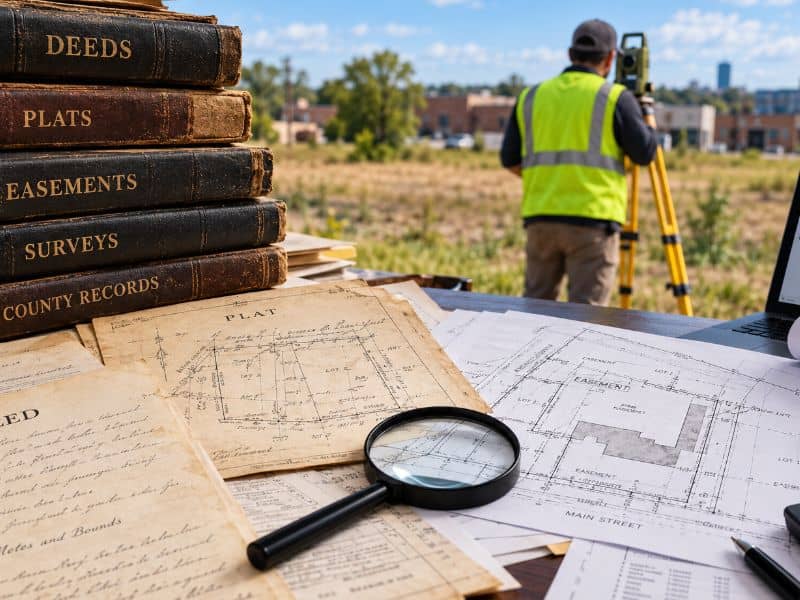
Two ALTA surveys on sites of the same size can come back with very different price tags. The field work might look nearly identical, yet one quote runs much higher. In many cases, the difference sits in the paperwork. Old deeds, missing plats, and records that don’t agree with each other can add hours of research before a surveyor ever sets up equipment.
This article explains how records research affects ALTA land survey cost and timing. It’s written mainly for commercial buyers and developers, with notes that help lenders, title agents, and attorneys. The key point is simple. If your site has a long or messy record history, plan for more research time and order early.
Why Records Research Affects ALTA Land Survey Cost
Records research is the work a surveyor does to find and review the documents that describe a property. That includes deeds, plats, easements, and earlier surveys. An ALTA/NSPS Land Title Survey has to tie field evidence back to the title record, so this step isn’t optional. The more documents there are, and the harder they are to read, the more time the job takes.
Time drives cost. A site with clean, recent records may need only a short review. A parcel that’s been split, combined, and resold over many decades can take days of digging and cross-checking.
Ask your surveyor how research time is priced. Some firms include a set amount in a fixed fee, while others bill extra research by the hour. Knowing this up front helps you avoid surprises on the final invoice.
Which Property Records May Require Additional Review
Some records take far more effort than others. The title commitment, which is the title company’s list of documents and exceptions tied to the land, is the starting point. Each exception may point to another document the surveyor has to pull and plot.
Records that often add review time include:
- Old deeds with metes and bounds descriptions, which describe boundaries by distances and directions from points that may no longer exist
- Recorded plats from older subdivisions or later re-subdivisions
- Easements written in vague terms with no clear location
- Highway or street right-of-way plans
- Vacated streets and alleys that were later absorbed into lots
- Prior surveys from different firms using different methods
Sites that combine several parcels into one tend to need the most work. Each original parcel has its own chain of deeds. The surveyor has to make all of them fit together on one map.
When Conflicting Records Require More Survey Analysis
Conflicting records happen when two or more documents describe the same line or corner in different ways. One deed might show a boundary a few feet off from the neighbor’s deed. A plat may not match the monuments found in the field. These conflicts can create gaps, where land seems to belong to no one, or overlaps, where two owners appear to claim the same strip.
Sorting this out takes careful analysis. The surveyor weighs written records against physical evidence like iron pins, old fences, and building lines. They may also study the order in which parcels were created, since earlier conveyances can carry more weight in some situations.
The surveyor reports what the evidence shows, but they don’t settle ownership disputes. If a conflict affects title, your title company and attorney will decide how to handle it. Expect conflicts to add both cost and time, especially if they need follow-up field work.
How Complex Research Extends the Surveying Process
Complex research stretches the schedule because much of it depends on other people. Some records sit in county offices, archives, or agency files that take time to request. Older documents may be handwritten, faded, or missing pages. Waiting on copies can add days or even weeks.
Research also feeds back into field work. A document found late may point to a monument the crew didn’t search for on the first visit. That can mean a return trip to the site and another round of calculations.
Title coordination adds time too. The surveyor may need to clarify exceptions with the title company or request missing documents. Each round of questions keeps the survey open longer, so build a buffer into any closing or loan date.
Planning for Records Research Before Ordering an ALTA Survey
The best way to control ALTA land survey cost on a complex site is to gather documents before you order. Good preparation shortens research and keeps the quote closer to the final bill. Survey needs vary by lender, title company, property type, and project scope, so confirm them early.
Steps that help:
- Order the title commitment first and ask for copies of every exception document
- Share any prior surveys, plats, or site plans you already have
- Tell the surveyor if the site combines multiple parcels or has a history of disputes
- Ask how the firm prices extra research and return field visits
- Set your closing or loan date with room for delays
Being open about the site’s history makes the estimate more accurate. A surveyor who knows about a messy record history up front can plan for it instead of reacting to it.
Frequently Asked Questions
How much does records research add to ALTA land survey cost?
It depends on how many documents exist and how clear they are. A site with recent, clean records may add very little. A site with old deeds, combined parcels, or conflicts can add a lot of time. Ask your surveyor for an estimate that explains how research is priced.
Can I lower the cost by providing my own records?
Often, yes. Prior surveys, recorded plats, and deed copies can save the surveyor search time. The surveyor still has to review and confirm everything you provide. Even so, a head start usually helps both cost and timing.
Why does the title commitment matter so much?
The title commitment lists the recorded items that affect the property. An ALTA survey must address these items where they can be located on the ground. Without it, the surveyor can’t finish the research. Order it as early as possible.
What happens if records conflict with each other?
The surveyor compares the records with physical evidence found in the field. They show the conflict on the survey and explain what the evidence supports. They don’t decide who owns disputed land. Your title company and attorney handle that part.
How long can extensive records research delay a survey?
Delays can range from a few days to several weeks. Slow record requests, missing documents, and return site visits all add time. Each project is different, so ask your surveyor for a realistic schedule. Confirm timing early if a closing or permit depends on the survey.
