↓
 

Pittsburgh Land Surveying

Local Land Surveyors in Pittsburgh, PA

Pittsburgh Land Surveying
  • Home
  • ALTA Survey
  • Boundary Surveying
  • Construction Survey
  • Drone LiDAR Mapping
  • Elevation Certificate
  • Land Surveying
  • Topographic Survey
  • Blog
  • Contact Us
Home 1 2 3 … 7 8 >>

Post navigation

← Older posts

Welcome to Pittsburgh Land Surveying

Pittsburgh Land Surveying Posted on August 18, 2017 by PittsburghSurveyorApril 15, 2020

Your Final Stop for ALL of Your Survey Needs!                                         Contact us today for a free quote!

This site is intended to provide you with information on Land Surveying in the Pittsburgh, PA and Allegheny County area of Pennsylvania. If you’re looking for a Pittsburgh Land Surveyor, you’ve come to the right place. If you’d rather talk to someone about your land surveying needs, please call our local number at (412) 214 7670 today. For more information, please continue to read.

land surveyingLand Surveyors are professionals who make precise measurements to determine the size and boundaries of a piece of real estate.  While this is a simplistic definition, boundary surveying is one of the most common types of surveying related to home and land owners. If you fall into the following categories, please click on the appropriate link for more information on that subject:

Pittsburgh Land Surveying services:

    1. I need to know where my property corners or property lines are. (Boundary Survey)
    2. I have a loan closing or re-finance coming up on my home in a subdivision. (Lot Survey)
    3. I need a map of my property with contour lines to show elevation differences for my architect or engineer. (Topo Survey)
    4. I’ve just been told I’m in a flood zone or I’ve been told I need an elevation certificate in order to obtain flood insurance or prove I don’t need it. (Flood Survey)
    5. I’m purchasing a lot/house in a recorded subdivision. (Lot Survey – See Boundary Survey if you’re not in a subdivision.)
    6. I’m purchasing a larger tract of land, acreage, that hasn’t been subdivided in the past. (Boundary Survey)

Contact Pittsburgh Land Surveying services TODAY at (412) 214 7670.

Posted in boundary surveying, elevation certificate, land surveying, land surveyor | Tagged boundary survey, land surveyor, land surveyor pittsburgh pa, Pittsburgh Land Surveying

Industrial Redevelopment Planning Supported by Comprehensive Land Survey Analysis

Pittsburgh Land Surveying Posted on July 3, 2026 by PittsburghSurveyorJuly 3, 2026
Project team reviewing plans at an industrial site for redevelopment survey analysis

Old industrial sites rarely start from a clean slate. Cracked slabs, rusted fences and forgotten access roads all sit waiting for the next owner to sort out. Land survey analysis maps those leftovers in exact detail, so a developer sees the property as it truly is before planning a new use. The work turns a messy, aging site into a set of recorded facts. With those facts in hand, a redevelopment team plans around what already exists instead of guessing at it. That early read shapes every choice that follows.

Reading Existing Industrial Site Conditions Before Reuse Planning

Before anyone decides how to reuse an industrial lot, they need a clear count of what stands on it. A survey crew records the building pads, the paved yards, the old truck routes and every fence line that splits the property. These are the bones of the old operation, and they set the limits for whatever comes next.

Aerial guesses and old plant drawings only go so far. A decades-old site plan may show a layout that changed three tenants ago. Field survey work catches the current reality, down to the storage yard that spread past its original edge and the loading pad someone poured without a permit. That accuracy keeps a reuse plan tied to the site that exists today.

Knowing these features early changes how a developer thinks about the whole property. A wide paved apron might serve a new warehouse without fresh concrete. A cluster of small buildings might make more sense being cleared than kept. The survey lays out those options in plain measurements, so the reuse conversation starts from fact rather than hope.

Mapping Physical Obstacles That Can Affect Redevelopment Design

Every old industrial property hides a few surprises that can derail a fresh design. Some sit in plain sight, and others hide under weeds or fill. A survey pins down where each one sits and how big it is, which lets a design team plan around the trouble instead of hitting it mid-build.

Common obstacles a survey brings into the open include:

  • Abandoned concrete slabs that resist new foundations without heavy demolition
  • Old retaining walls that hold back grade and limit where new work can go
  • Loading areas and docks built for trucks a new tenant may never run
  • Utility corridors that cross the site and restrict where structures can sit
  • Rail spurs and their beds, which can complicate paving and layout
  • Drainage structures and uneven ground that force design changes early

A design team that maps these items up front avoids the worst kind of delay, the kind that shows up after crews break ground. Redrawing a warehouse plan because of a buried slab costs far more than spotting the slab on a survey. So the map earns its keep long before the first machine rolls in.

Comparing Old Industrial Layouts With New Project Requirements

Reuse always comes down to a fit test between the old layout and the new plan. Survey data runs that test by laying the recorded site against the demands of each proposed use. A warehouse needs long clear spans and truck access. Light manufacturing needs power runs and floor loading. Flex space and storage each ask for something different again.

With the layout mapped, a team sorts the site into three groups: keep, remove and add. A sound building pad might stay and carry a new structure. A maze of old walls might come down to open room for parking. The recorded facts show which call makes sense for each part of the property.

That kind of sort saves real money. Demolition, grading and new construction all cost more when a team guesses wrong about what the site can hold. Working from survey data, a developer commits to a reuse plan that matches the ground instead of fighting it.

Helping Developers Reduce Risk During Site Due Diligence

Buying an industrial property blind is an expensive gamble. The price looks fine until a hidden slab, a dead utility line or a drainage problem turns the deal sour after closing. A full survey review during site due diligence pulls those risks into the light while a developer can still act on them.

Money partners want the same clarity. Lenders and attorneys read a survey to judge what the property can support before they sign off on a loan or a contract. Engineers and planners use it to flag limits that could shrink the buildable area. When each of them reviews the real numbers, the deal carries fewer unknowns and a price that reflects the actual site.

The review exists to price the risk before a dollar moves. A developer who learns about buried tanks or a failing retaining wall can adjust the offer, budget the fix or walk from a bad buy. That informed choice protects the capital riding on the project.

Creating a Reliable Survey Record for Future Redevelopment Phases

Industrial projects rarely finish in one push. A developer might raise one warehouse now, then add a second building, more parking or a bigger loading area as tenants sign on. A survey done at the start becomes the base map every later phase draws from.

That record saves the cost of re-measuring for every phase. When phase two arrives, the team already knows the exact boundaries, the grades and the spots where utilities run. They design the next building against real numbers rather than ordering fresh fieldwork each round. Over a long project, that saved time and money adds up.

The same record guides bigger swings down the road. Adding truck access, expanding a pad or reworking the yard all lean on accurate site data to stay within the property and clear of the obstacles already mapped. With that base map on file, each new phase begins with the site already measured rather than a blank sheet.

Frequently Asked Questions

Why is land survey analysis important for industrial redevelopment?

A survey review shows a redevelopment team the real state of the property before they commit to a new use. It captures the existing layout, access points and standing improvements so early plans rest in fact.

Can a land survey help decide if an old industrial site can be reused?

Yes. The recorded layout and mapped features let developers weigh reuse options side by side. That comparison guides the big design calls before anyone spends money on plans.

What site features should be reviewed before redeveloping industrial land?

Teams usually check paved areas, building locations, storage yards, loading zones, old foundations, fences, drainage features and access routes. Each one can shape what a new project keeps or clears away.

How does survey data support phased redevelopment planning?

It hands owners and project teams a dependable site record for later phases. They lean on it when planning added buildings, new parking, fresh access points or expanded work areas.

Posted in land surveying | Tagged Land Surveying

How Land Surveying Supports Property Line Confidence Before Installing Fences, Garages, and Additions

Pittsburgh Land Surveying Posted on June 25, 2026 by PittsburghSurveyorJune 19, 2026
Land surveying professional using a total station to establish accurate property boundaries before residential improvements

Before you put up a fence or build a new garage, you need to know where your land actually ends. That sounds obvious, but a lot of homeowners find out the hard way that the line they assumed was correct was never correct at all. This is where land surveying comes in. It gives you real, accurate boundary lines instead of guesses based on old fences or a neighbor’s word.

Property lines are not always where they look like they are. Trees grow, fences shift, and old markers get covered by dirt and grass over time. A survey clears all of that up before you spend money on a project you might have to redo later. So let’s look at why this step matters so much for anyone planning to build, fence, or add on to their property.

Why Existing Landscaping Can Make Property Lines Hard to Recognize

A lot of homeowners look at a row of trees or an old hedge and assume that’s where their property ends. It seems like a safe guess. Trees have been there for decades, after all, and somebody must have planted them on purpose.

But landscaping is not a legal record. Trees get planted in random spots. Hedges grow wider over the years and creep onto land they never started on. Old wooden fences sag, get replaced, or get rebuilt a few feet off from where the original one stood.

This is exactly why land surveying matters so much before any new work begins. A survey uses real measurements and legal records, not guesswork based on what’s been sitting in the yard for thirty years. Once you have that information, you know exactly where your land starts and stops, and that clarity protects you from disputes and awkward conversations with the people next door.

How Home Additions Can Affect Required Setbacks

Adding a garage, a new room, or a detached shed sounds simple until you find out how much your local setback rules actually limit your options. Setbacks are the minimum distance a structure has to be from your property line. Every town has its own version of these rules, and they apply whether you like it or not.

Here’s the tricky part. You can’t follow a setback rule accurately if you don’t know exactly where your property line sits. Guessing the line by a few feet in either direction can mean the difference between a project that gets approved and one that gets flagged.

Land surveying gives you the real numbers before you start drawing up plans. You’ll know how much usable space you actually have, and you can design around that space instead of hoping it works out. This saves time and keeps your project moving instead of stalling out at the permit office.

Why Shared Driveways and Side Yards Deserve Extra Attention

Pittsburgh has a lot of older neighborhoods with narrow lots packed close together. Many homes share driveways, and side yards are often just a few feet wide. These tight spaces create plenty of room for confusion when someone wants to install a fence or expand a structure.

A shared driveway might look like it belongs entirely to one house, but the legal boundary could run straight down the middle of it. Side yards work the same way. What looks like your space might actually overlap with your neighbor’s, or vice versa. Without a survey, you’re relying on assumptions that may have been wrong for years.

Land surveying clears up exactly how your property relates to the driveway, the side yard, and the homes around you. This matters even more before fence installation, since a fence built in the wrong spot can lead to disputes that drag on for months. Getting the boundary right from the start avoids all of that.

Land Surveying Helps Coordinate Projects With Contractors and Permit Applications

Builders, fence installers, architects, and permitting offices all need the same starting point to do their jobs well. Without accurate boundary information, everyone involved is working off slightly different assumptions, and that’s when mistakes happen.

Survey data gives every party a shared reference. Contractors know exactly where they can build. Architects can design additions that actually fit within the legal lines. Permitting offices can review applications faster because the numbers being submitted are accurate instead of estimated.

This kind of coordination keeps projects on schedule. Permit delays often happen because submitted information doesn’t match what’s actually on the ground, and that mismatch usually traces back to an inaccurate boundary assumption. Land surveying removes that risk early, so the whole project moves forward with fewer interruptions.

Property Improvements Can Add Long-Term Value When Built With Accurate Information

A fence, garage, or addition built in the right place does more than solve a short-term need. It protects the value of your property for years to come. Accurate boundary information matters when it’s time to sell a home, refinance a mortgage, or update insurance documents. Buyers and lenders want assurance that structures sit where they’re supposed to. A property with unclear boundaries can create complications during these processes, sometimes at the worst possible time.

Land surveying creates a clear, documented record that holds up well beyond the day construction wraps up. That record supports future property decisions and gives homeowners real peace of mind that their investment is built on solid ground, literally and legally.

Frequently Asked Questions

Why is land surveying useful before building a garage or addition?

Land surveying helps establish accurate property boundaries and provides information that supports planning for new improvements.

Can trees and existing fences show the true property line?

Not always. Existing features may not match the legal boundary, which is why many property owners rely on land surveying for accurate information.

Why are setback requirements important for home projects?

Setbacks help determine where structures may be placed. Understanding available space early can make planning easier.

How does land surveying help with permit applications?

Survey information provides a reliable reference that builders, architects, and permitting offices can use when reviewing a project.

Who benefits from land surveying before installing fences and additions?

Homeowners, contractors, architects, buyers, and future property owners all benefit from having accurate boundary information before improvements are made.

Posted in land surveying | Tagged Land Surveying

Why Construction Surveys Matter When Redeveloping Older Properties in Pittsburgh

Pittsburgh Land Surveying Posted on June 19, 2026 by PittsburghSurveyorJune 19, 2026
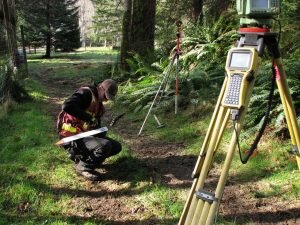
Construction survey team coordinating redevelopment work at an older Pittsburgh commercial property

Redeveloping an old building in Pittsburgh sounds easy at first. Tear down the old stuff, put up something new, and move on. But anyone who has worked on one of these projects knows it almost never goes that smoothly. A construction survey is one of the first steps that needs to happen. It is often the one step that saves a project from big, costly surprises later.

Pittsburgh has a lot of old properties. Many of them sit on top of years of hidden history. Old pipes, hidden slopes, retaining walls nobody wrote down, and buildings that were never mapped out the right way. Without a clear picture of what is really there, contractors are just guessing. And guessing on a job site gets expensive fast.

So let’s look at why this step matters so much. We will also see how it shapes the success of redevelopment work across the city.

Why Existing Utilities Can Complicate Redevelopment Projects

Older properties in Pittsburgh often sit on top of underground utilities. These were put in the ground decades ago. Water lines, sewer systems, gas lines, and even old pipes from buildings that no longer exist can all be buried under the surface. In many cases, the original records for these utilities are missing or incomplete.

This causes a real problem once work begins. A crew digging for a new foundation might hit a gas line that was never on any map. Or they might break a sewer line that still serves the house next door. These problems cause delays. They also create safety risks and repair costs nobody planned for.

This is where a construction survey proves its worth. Surveyors find and record these underground features before any digging starts. Because of this, the design team can plan around the utilities instead of running into them by accident. It is a simple step, but it stops a lot of headaches down the road.

How Construction Surveys Help Tie New Improvements Into Older Site Features

Most redevelopment projects do not start with a clean, empty lot. New buildings, parking lots, or roads usually need to connect to structures that already exist. That connection has to line up the right way, or the whole site ends up looking off.

This is where construction surveys really help. Surveyors set up exact control points. These points tie the new work into the older parts of the site. So when a builder adds a new parking lot next to an older building, the heights, edges, and entrances actually match up the way they should.

Without this kind of control, problems show up fast. Curbs that do not line up right. Driveways with strange bumps in them. Sidewalks that do not connect the way they are supposed to. These problems are hard and costly to fix once the concrete is down. Getting the survey work right from the start makes everything after it go much smoother.

Why Elevation Differences Matter on Pittsburgh Redevelopment Sites

Pittsburgh’s hills are part of what makes the city interesting. They also make construction harder. Many redevelopment sites sit on slopes, near retaining walls, or on lots with grade changes that are not easy to see just by looking around.

These height changes affect almost every part of a build. Drainage has to flow the right way, or water ends up pooling where it should not. Foundations need correct grade numbers to be built properly. Retaining walls need careful checking too, since even a small mistake can lead to big structural problems later on.

Accurate construction surveys give builders the elevation numbers they need to handle all of this the right way. Instead of guessing how a slope behaves, they have real data to work from. That means fewer surprises with drainage, fewer grading mistakes, and a site that works the way it was meant to.

Construction Surveys Help Coordinate Demolition and New Construction

Redevelopment usually means something old has to come down before something new can go up. That sounds simple, but tearing down a structure near other buildings, utilities, or property lines takes careful planning.

Construction surveys give demolition crews the layout details they need to work safely. Surveyors mark out boundaries. They point out what needs to stay untouched. They also give reference points that keep the project on track. Because of this, crews can take down old structures without harming nearby features that are supposed to remain standing.

This kind of teamwork matters even more on tight city lots, and Pittsburgh has plenty of those. When space is limited, there is little room for mistakes. A solid survey keeps demolition crews and construction crews working together instead of working against each other.

Redevelopment Projects Need Accurate Records for Future Expansion

A lot of redeveloped properties do not stay the same for long. Owners add on to them, update the utilities, or expand the site again a few years later. When that happens, the original survey records become very useful.

Keeping accurate survey control during the first phase of construction creates a solid record for the future. So when a new addition gets designed later, the team does not have to start from zero. They already have real, documented data about grades, utility locations, and property lines to work from.

This saves time and money on future projects. It also lowers the risk of running into conflicts with what is already built. Good records today make tomorrow’s work a lot easier. That is exactly why this step should never be skipped or rushed.

Frequently Asked Questions

Why are construction surveys important when redeveloping older properties?

Construction surveys give accurate reference points that help contractors connect new work to the existing site. This helps redevelopment projects move forward with more confidence.

What challenges do older properties present during construction?

Older sites may have unknown utilities, changing elevations, retaining walls, and infrastructure that was put in many years ago. These conditions often need careful planning during redevelopment.

Can a construction survey help when buildings are being demolished?

Yes. Construction surveys help set up control points and layout details. These let demolition crews and construction crews work together the right way.

Why are elevation changes important on Pittsburgh properties?

Pittsburgh’s land often has steep slopes and changing grades. Construction surveys help builders keep the right elevations for buildings, roads, and drainage systems.

Who benefits from construction surveys on redevelopment projects?

Developers, builders, engineers, contractors, architects, and property owners all depend on construction surveys to keep redevelopment projects organized and lined up correctly.

Posted in construction | Tagged construction survey

Post navigation

← Older posts
Get Quote Button
© Pittsburgh Land Surveying
Pittsburgh, Pennsylvania
Phone: (412) 214 7670

Web Development and SEO by:
AuburnBusiness.com, LLC


Privacy Policy | Terms of Use

The owner of this website, Boxer Survey USA, provides coordination of professional land surveying and engineering services in all 50 states. The professional surveying and engineering services provided to you will be conducted by fully licensed professionals in your state.

↑